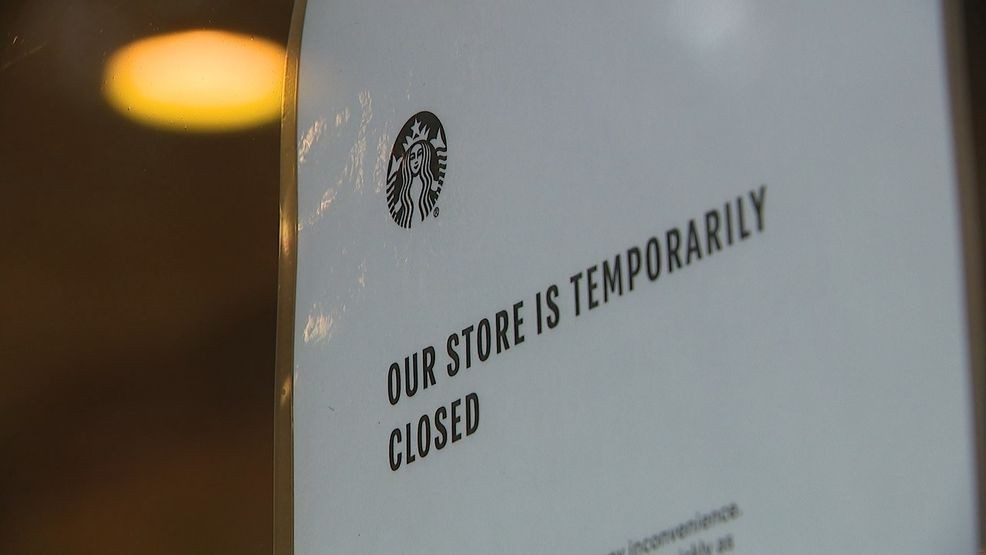
Starbucks workers' nationwide strike temporarily closes Seattle store
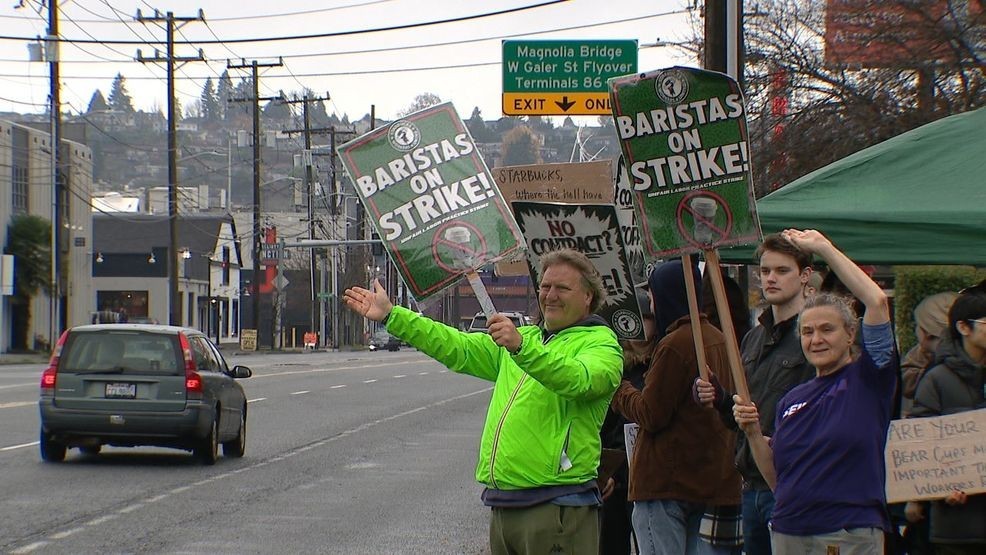
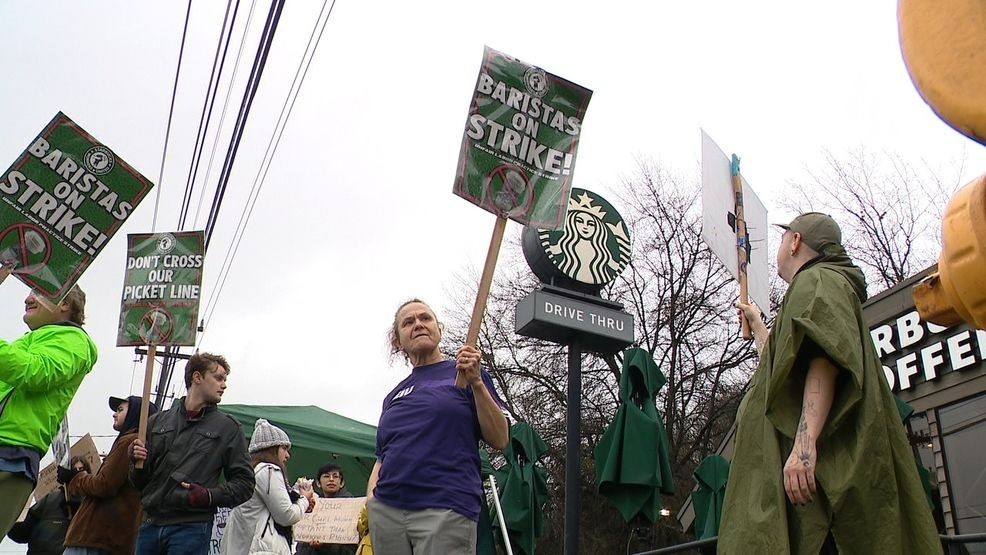
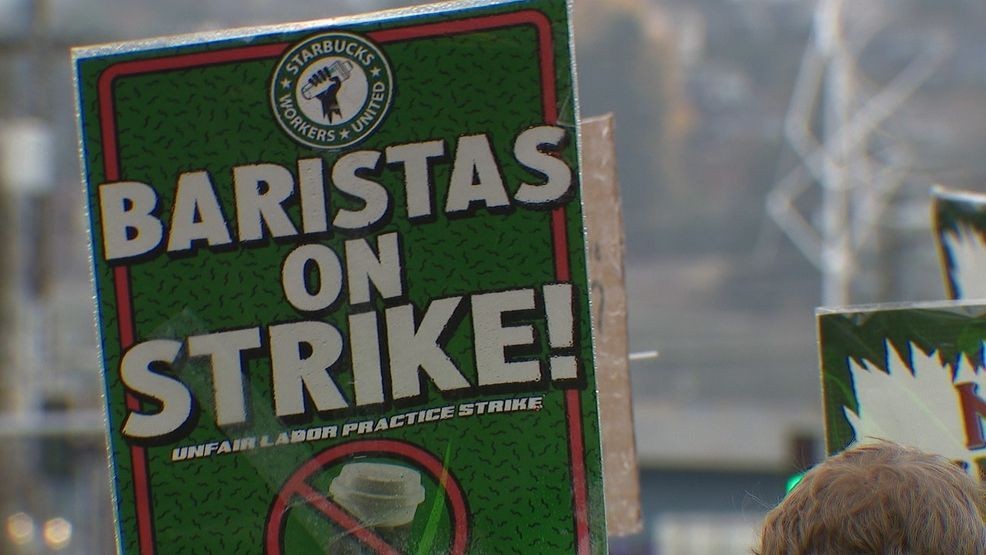
SEATTLE — It's day four of a nationwide strike of unionized Starbucks employees, and Workers United said it could be the largest and longest strike in the company's history.
The strike began on Thursday, Starbucks' busy "Red Cup Day," and has forced the closure of stores across the U.S., including Seattle.
SEE ALSO | Starbucks workers kick off 65-store US strike on company's busy Red Cup Day
Both the union and Starbucks are pointing the finger at each other for who's to blame for stalled contract negotiations. The two parties haven't been at the bargaining table together since April.
Regulars at the Starbucks drive-through on Elliott Ave. in Interbay are being met by a 'closed' sign, as most of the unionized store's employees take to the picket line.
"We're prepared to be out here for weeks or more," said Brenna Nendel, a supervisor at the location. "It's indefinite. It's up to the company [Starbucks]."
The strike largely boils down to wages, hours, and scheduling, and other working conditions. Nendel said starting pay for hourly Starbucks employees in Seattle is the city's minimum wage of $20.76, but she claims many smaller coffeehouses in the city start their employees at $25 an hour.
"If Starbucks is going to be touting itself as a progressive company, it needs to have actions to back those words up," said Gus Nelson, a three-year employee of the Interbay Starbucks.
Workers claim contract negotiations stalled when Brian Niccol became the CEO of Starbucks in September 2024, throwing out progress made under the company's previous CEO, Laxman Narasimhan.
SEE ALSO | Starbucks closes Seattle Reserve locations amid restructuring efforts
Nendel told KOMO News that Starbucks has yet to offer something higher than a 1.5% raise, which she and her employees argue doesn't meet the criteria for a livable wage in Seattle.
"It's very obvious that management and the company don't care about us," she said. "They call us 'partners,' but we're not."
In a company letter dated Nov. 5, Starbucks' Chief Partner Officer, Sara Kelly, said she was disappointed that United Workers wanted to strike.
"Workers United walked away from the table, but if they are ready to come back, we’re ready to talk," she wrote.
Kelly also noted that Workers United represents less than 4% of Starbucks employees. The company has over 10,000 stores in the U.S., and Kelly said approximately 550 of them are unionized.
Despite union workers strategically beginning their strike on 'Reusable Red Cup Day,' Jaci Anderson, a Starbucks spokesperson, claimed less than 1% of the company's coffeehouses were seeing disruptions. Niccol, Starbucks' CEO, said in a company blog post that it was the strongest 'Reusable Red Cup Day' in company history.
In addition to higher wages, union workers in Seattle said they're asking for more consistent staffing and scheduling.
"It's harder to predict if I need to pick up shifts, if I can make plans in my life," Nelson continued, "or if I'm going to have to work six days to not even hit 40 hours."
Nendel, who spent five hours on the picket line Sunday, claimed Starbucks had been targeting union employees. She said the company withheld certain new benefits, like credit card tipping.
"Any store that had unionized prior to that date, the company denied them the update in the system for credit card tips," Nendel claimed.
Starbucks said it couldn't legally apply new benefits to stores that have voted to unionize, according to CNN Business.
As the strike stretches past a fourth day, Anderson has called several of Workers United's proposals unserious and lacking evidence. The union proposed pay increases of 65% immediately and 77% over three years, according to Anderson.
Still, union workers maintain their stance of, 'No contract? No coffee.'