Democrats hope to make Iowa competitive again with open Senate seat in '26 election
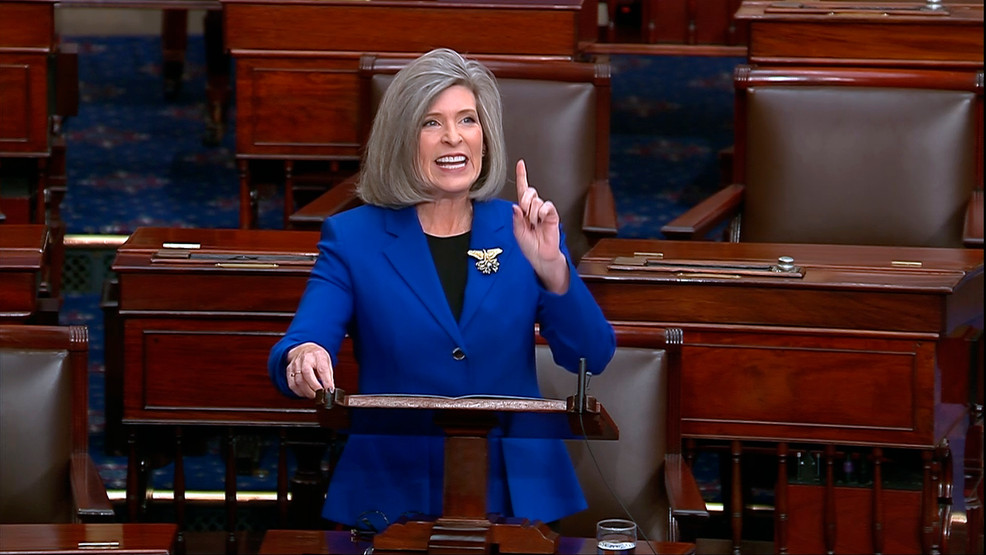
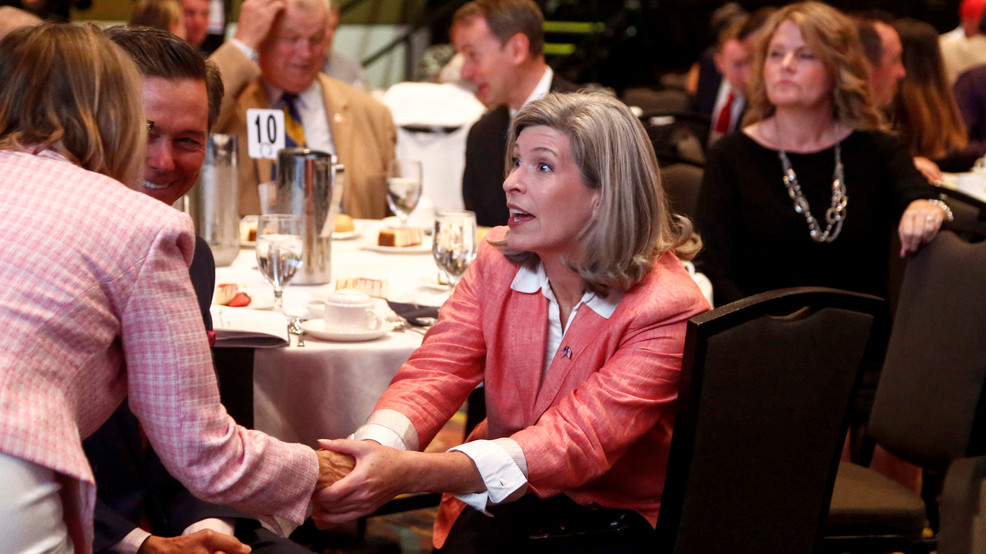
WASHINGTON (TNND) — Two-term Republican Sen. Joni Ernst of Iowa is opting against running for reelection next year in a decision that may create a competitive race for a Senate seat in a state that has veered toward the GOP in recent years.
Ernst announced she was not seeking a third term in a video posted on social media on Tuesday.
"While this chapter of elected office will soon close, I will always find ways to best serve my community, state and these great United States of America," she said in the video.
Ernst’s departure from the Senate adds to the list of Republican incumbents that have clashed with the president at times who have opted against running for reelection in decisions that could lead to a more competitive environment during the 2026 midterms.
Her decision to leave the seat could make the race in red-leaning Iowa more evenly matched, where Democrats are also hoping to take back the governorship with the departure of Gov. Kim Reynolds and the party also saw a boost winning a special election for the state senate in a district easily won by Trump last November.
Democrats have been searching for a chance to move Iowa back toward its swing state status after seeing it drift toward the GOP over the last decade. Former President Barack Obama won the state twice, but Republicans have held the governorship since 2010 and both Senate seats since 2014.
The state also has a high share of voters registered as “no party,” that could tilt close elections in either direction. Midterm elections are typically a referendum on the party in power, a longstanding trend that could further boost hopes for Democrats hoping to retake majorities in Congress.
The Cook Political Report had rated Iowa’s Senate race as “likely Republican” prior to Ernst’s retirement after a gaffe during a town hall when she told a constituent “We all are going to die” in response to frustrations about Medicaid cuts in the “big, beautiful bill.” The loss of an incumbent running for reelection may further boost Democrats’ hopes of flipping the seat, one of few opportunities for the party in the upcoming cycle.
“One of the questions is to what extent Trump voters are going to come out in a midterm. Democrats, I think, are hoping for some combination of the Trump voters won't turn out, and the party that doesn't control the White House does better in the midterms,” said Tim Hagle, a political science professor at the University of Iowa. “It seems like better, higher profile candidates are coming out of the woodwork and running this time for the Democrats where they didn't four years ago.”
Multiple Democrats have already announced plans to jump into the race, including former state Rep. Bob Krause, state Sen. Zach Wahls, state Rep. Josh Turek, Jackie Norris, who chairs the Des Moines school board and was chief of staff to former first lady Michelle Obama, and Nathan Sage, a former president of a local chamber of commerce.
Even without facing an incumbent, Democrats are facing an uphill climb to take control of the seat away from Republicans. The GOP has an advantage in voter registration, controls all the state’s congressional seats and has voted for President Donald Trump in the last three presidential elections.
“Joni Ernst is retiring because she knows that Iowans are furious at her and Washington Republicans for threatening our health care and spiking costs for families. No matter which Republican runs for this seat, they can’t hide from the harm the GOP has caused to working families across Iowa,” Iowa Democratic Party chair Rita Hart said in a statement.
Several Republicans could enter the race once Ernst formally announces her departure, but three-term Rep. Ashley Hinson is broadly expected to run for the seat. Hinson’s district encompasses much of northeastern Iowa and would give the GOP a candidate with high name recognition in a coveted seat but would create another for the party to try to hold without an incumbent running for reelection. Former state Sen. Jim Carlin and veteran Joshua Smith had already entered to challenge Ernst.
“At this point, Republicans probably are still in a relatively good position, but that does depend on who they put up for their nominees — especially for these seats that are now coming open,” Hagle said.
Republicans are favored to hold onto the Senate majority after 2026 with a map that includes just two seats currently held by the GOP in states that Trump did not win by double-digits in 2024.
Democrats best flip opportunities are in Maine, the only state where a Republican is running for a seat won by former Vice President Kamala Harris, and in North Carolina, a swing state where Republicans are also losing an incumbent and face a potent challenger in former Democratic Gov. Roy Cooper. Ernst’s retirement will likely make Iowa the Democrats’ next-best chance for a flip.
The GOP can afford to lose up to three seats and keep the majority with Vice President JD Vance holding the tiebreaking vote.